
Valeda Light Therapy
A new way to protect your vision from dry AMD.
Great Lakes Eye Care now offers the first and only FDA-authorized, non-invasive light therapy for dry age-related macular degeneration.

Valeda Light Therapy
Great Lakes Eye Care now offers the first and only FDA-authorized, non-invasive light therapy for dry age-related macular degeneration.
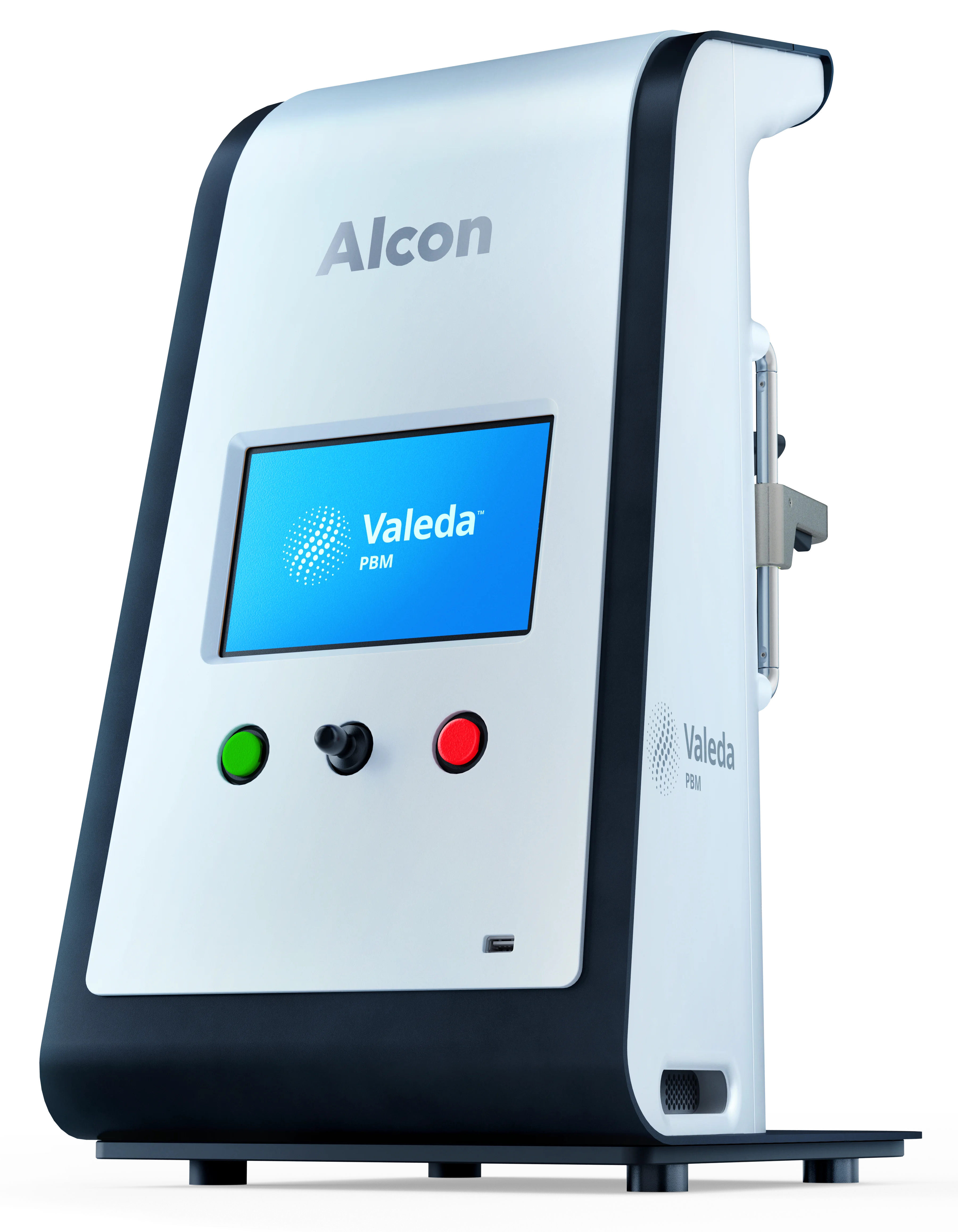 First & only FDA-authorized therapy for dry AMD
What Is Valeda Light Therapy?
The Valeda Photobiomodulation (PBM) System is an advanced, non-invasive light therapy for patients with dry age-related macular degeneration and overall retinal changes.
It uses specific wavelengths of light to stimulate cellular activity in the retina — helping support energy production in retinal cells and overall visual function.
It represents a new approach to managing retinal health, focused on preserving vision and slowing the progression of retinal disease.
How photobiomodulation works at the cellular level
Backed By Clinical Research
While Valeda is intended for dry AMD, off-label use is available for any patient interested in maintaining vision and overall retinal health.
How Treatment Works
Your doctor evaluates your retinal health and lets you know whether Valeda is right for you.
Your provider monitors your vision and determines whether additional treatment cycles are appropriate.
What Does It Feel Like?
What You Should Know
Valeda is not a cure for macular degeneration, but it is designed to:
Results vary based on disease stage and individual response.
Publications & Clinical Trials
A summary of what the research on Valeda photobiomodulation has observed — and what it may mean for patients.
| Outcome / Measure | What Was Observed | What This Means |
|---|---|---|
| Improvements in visual acuity | At 13 months, treated patients gained an average of 5.4 letters vs 3.0 in the sham group. At 24 months, treated eyes maintained a gain of 5+ letters — one line on the standard chart. | Gaining five letters is roughly one line on the eye chart — which can mean reading slightly smaller print, or seeing faces and details a little more clearly in daily life. |
| Share of eyes gaining 5+ letters | About 55% of treated eyes gained 5 or more letters by 13 months. In extension studies, more than 60% retained the benefit after additional treatments. | Over half of patients saw a noticeable, moderate improvement — a realistic outcome, though not everyone will experience large changes. |
| Slowing disease features | New geographic atrophy was significantly lower in treated eyes (5–6% vs 21–24% in sham). Treated eyes showed little to no increase in drusen volume. | Valeda may do more than improve vision temporarily — it may help slow worsening and preserve the structure of the retina over the long term. |
| Duration & treatment pattern | Delivered in cycles — about nine treatments over 3–5 weeks, repeated periodically. Benefit maintained over 24 months, with data now out to 4.5 years in some patients. | This is not a one-and-done treatment. Repeated cycles over time help achieve and keep the benefit — and benefit can persist even through treatment pauses. |
| Safety & side effects | Overall safety was strong, with no serious device-related adverse events. Most side effects were mild and transient, and patient compliance was high. | Patients can have confidence that serious risks are rare. Mild discomfort is possible, but the therapy was well tolerated in studies. |
Insurance & Payment
Most insurance plans do not currently have an active policy for this treatment, so Valeda Light Therapy is an out-of-pocket expense. We offer flexible payment options — the more you commit to, the more you save.
Prices are per eye, per treatment. Payment is due prior to your initial treatment. Ask our team about the plan that best fits your care.
Talk with our team about whether Valeda Light Therapy is right for you and your vision.
Call (269) 428-3300 ext. 175 · M–F 7:30 AM – 4:30 PM